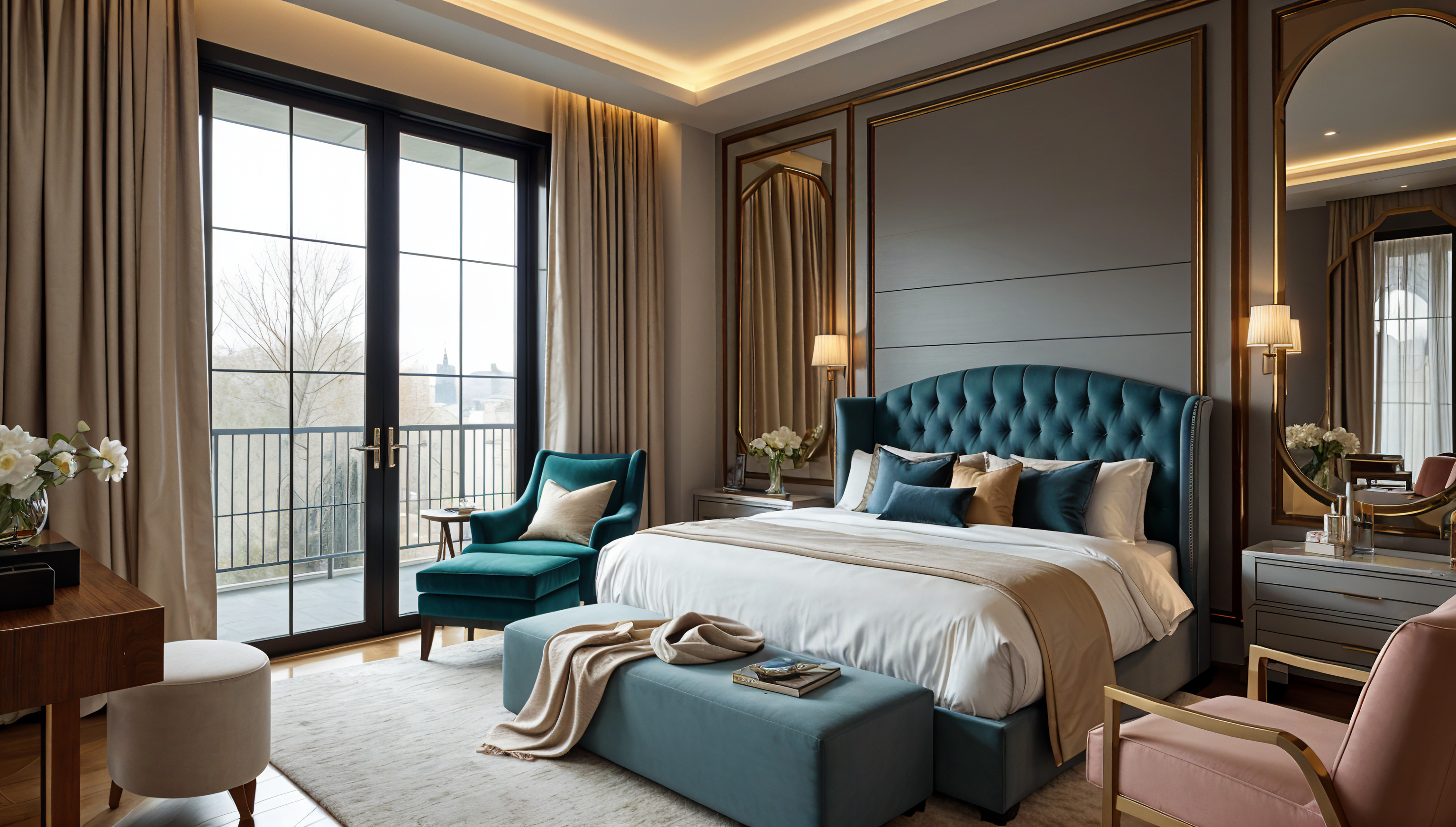
Many women live in homes that hold their belongings but do not hold their nervous system.
The space functions, but it does not settle them. It feels crowded, visually noisy, or simply tired. And yet the conditions of the spaces we repeatedly inhabit shape how we think, how we decide, and how we recover.
A haven is not about perfection. It is about intentional conditions.
Your home is not a backdrop. It is a system that either supports you or works against you.
Reframing home as an instrument, not a showroom
It helps to think of your home as a space that shapes how you move through your days. The question is not only "Does this look good?" The deeper question is "Does this support how I want to think, work, rest and connect here?"
That perspective is both grounding and freeing. You are less tempted to arrange things for strangers and more interested in creating an environment that makes sense for your actual life. If you lead a full, multi-role life, your home needs to function under that reality, not under an imaginary level of free time.
Three dimensions of a haven

A haven is built along three dimensions: visual order, sensory comfort, and relational flow.
Visual order. Clear surfaces, defined zones and consistent storage lower visual noise. The brain processes clutter as unfinished business. Reducing what is constantly in view gives your mind a chance to rest. A single ordered corner can begin to change how you feel about an entire room.
Sensory comfort. Light, temperature, scent and texture all send signals to your body. Natural light during the day, warmer light in the evening, a comfortable place to sit and breathe, textiles that feel good. These are small but meaningful signals of safety that your body registers without instruction.
Beauty is not decoration. It is regulation.
Relational flow. The way furniture is arranged influences how people interact. Spaces that allow ease of movement and natural connection invite it. Spaces where people have to shout across rooms or constantly move things out of the way quietly discourage it. The arrangement is not neutral.
Small, high-impact shifts
You do not need a renovation budget to create a haven. You need a clear sequence.
Start with the space you encounter first when you enter the home. This is where your body decides whether it is arriving in chaos or in relative order. A clear, defined entry point changes the signal immediately.
Choose one main surface to protect from clutter at all times. The dining table, the coffee table, or your desk. That single protected surface creates a visual anchor that the rest of the space organises around.
Use closed storage for repetitive, visually noisy items. Chargers, paperwork, children's smaller things. Out of sight is not avoidance. It is editing.
Lighting is a high-leverage lever. Harsh, cool light increases alertness but can also increase agitation in the evening. Warmer, layered light from side lamps or candles signals to your body that it is time to slow down. This is not aesthetic. It affects how well you sleep.
If you are ready to build a home that supports the life you are building, private work with Kemi is where that happens.
Apply privatelyHome as a partner for your calling
For people who lead, build and care in many directions, home needs to function as more than a place to collapse between assignments. It can become a partner in your calling.
That might mean a dedicated chair where you meet with God in the morning. A small shelf that holds only your most important work tools. An evening each week reserved for unhurried conversation with the people you love. These are not luxuries. They are structures that make sustained output possible without chronic depletion.
The goal is not a magazine spread. The goal is an environment that quietly says: you are safe here. You can think here. You can rest here. You can be fully yourself here.
A haven is not an instant project. It is a series of intelligent, loving decisions made about where you live and how you live there.
With every cleared surface, every adjusted light, every small ritual introduced with intention, you send a message to your own body and to those who share your space.
This home is not just where we store our things. It is where we are allowed to rest, think, grow and be held.
Key positions
- Your home is not a backdrop. It is a system that either supports you or works against you. The conditions of the spaces we repeatedly inhabit shape how we think, decide and recover.
- A haven is built along three dimensions: visual order, sensory comfort, and relational flow. Each one sends a signal to your body. None of them requires a renovation budget.
- Start with the space you encounter first. That is where your body decides whether it is arriving in chaos or in order. One protected surface, one adjusted light, one closed storage decision can shift the entire feeling of a room.
- Home can be a partner in your calling. A dedicated space for morning stillness, a protected evening for unhurried conversation. These are structures that make sustained output possible without chronic depletion.
- A haven is not an instant project. It is a series of intelligent, loving decisions. Each one sends the same message: this is a place where you are allowed to rest, think, grow and be held.
I came to Kemi with a career, a home, and a life that looked right on the outside. What she helped me build was the version that felt right on the inside. The clarity I have now took me a year to find, and I would not trade it for anything.
Layo · London, UK · Private client
A well-ordered home does not just look calm. It produces it. Every small decision made with intention compounds into an environment that steadies your pace, clears your thinking, and allows you to rest without resistance.
Kemi King